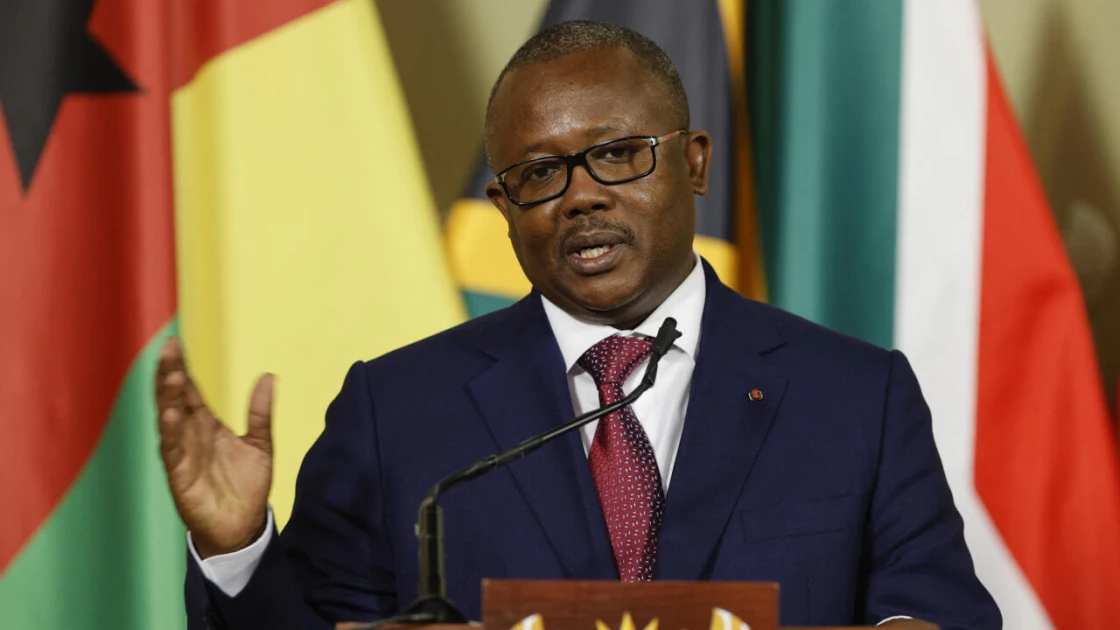
The African Union announced on Friday the immediate suspension of Guinea-Bissau following a military coup that toppled President Umaro Sissoco Embalo, the AU Commission chief told AFP. The move comes just two days after the military disrupted the announcement of election results in the small West African nation.
The coup, announced on Wednesday, has plunged the Portuguese-speaking country into uncertainty. The AU confirmed that Guinea-Bissau will be barred from participating in its institutions, with chairman Mahmoud Ali Youssouf saying the suspension would take effect "with immediate effect."
Following the takeover, the junta installed General Horta N'Tam, the former army chief of staff, as the head of a transitional government set to last one year. President Embalo, who was briefly detained by the military, fled to Senegal on Thursday.
Meanwhile, opposition presidential candidate Fernando Dias, who claims victory in the disputed elections, told AFP that he was "safe" and in hiding within the country.
The military action has drawn widespread condemnation. United Nations Secretary-General Antonio Guterres described the takeover as an "unacceptable violation of democratic principles." Similarly, the Economic Community of West African States (ECOWAS) also announced Guinea-Bissau’s suspension from "all decision-making bodies."
Guinea-Bissau, nestled between Senegal and Guinea, has a long history of political instability.
Since gaining independence from Portugal in 1974, the country has experienced four successful coups and several failed attempts. Electoral outcomes have often been contested, fueling political unrest.
In addition to political challenges, Guinea-Bissau is among the poorest nations globally.
Its unstable governance has made it a known route for drug trafficking between Latin America and Europe, exacerbating the country’s security and social issues.
The suspension aligns Guinea-Bissau with other African nations recently sanctioned by the AU following coups, including Mali, Burkina Faso, Niger, Sudan, and Madagascar.
Gabon, which had been suspended after the overthrow of President Ali Bongo, had its sanctions lifted in April.
The developments highlight persistent challenges for West African democracies, with regional and international bodies acting swiftly to condemn unconstitutional seizures of power while monitoring the situation closely.































Comments
Sign in with Google to comment, reply, and like comments.
Continue with Google